
Bird Nest & Pest Removal from Dryer Vents in Birmingham, AL
Chirping in the wall or twigs in the vent flap? Compare free, no-obligation quotes from independent local companies for nest and pest removal, cleaning and a code-compliant cap.
Get a Free Quote Call (727) 300-6656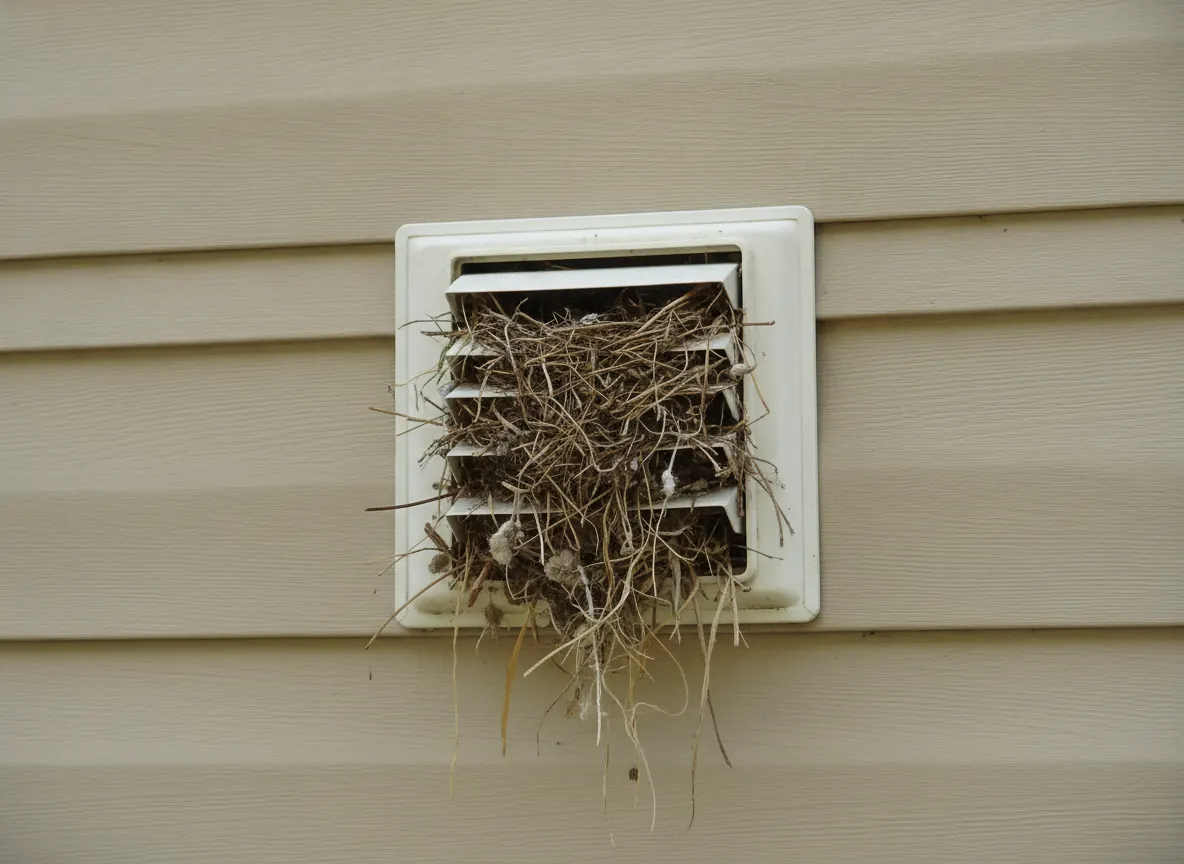
Signs a bird is nesting in your dryer vent
An exterior dryer vent is warm, sheltered and just the right size for small birds. Nests usually start right behind the flap or louvers and can extend a foot or more into the duct. Common signs:
- Chirping, fluttering or scratching from the wall or the vent behind the dryer
- Twigs, grass or feathers sticking out of the exterior hood
- A flap that stays propped open
- Birds flying in and out of the vent
- Drying that suddenly takes much longer
Nesting material blocks the same airflow lint does. The CPSC warns that a blocked vent can cause excessive heat build-up and, in some dryers, a fire. We connect Birmingham-area homeowners with independent local dryer vent companies for free, no-obligation quotes on nest and pest removal.
Step one: identify the species
Before anyone pulls a nest out, find out what kind of bird built it. The answer decides what can be done and when.
Most native birds are protected under the federal Migratory Bird Treaty Act (MBTA). The U.S. Fish and Wildlife Service (USFWS) says that for protected birds, “it is illegal to destroy a nest that has eggs or chicks in it.” If a protected native bird has an active nest in your vent, the usual answer is to wait until the young have left, or to ask about a permit, before the nest is removed.
Two of the birds most often found in vents are not covered. The USFWS list of species the MBTA does not apply to includes nonnative Old World sparrows, including the house (English) sparrow, and starlings. Nests of those species can generally be removed.
Not sure what bird it is? A photo of the bird or the nest helps. Ask the company you hire how it identifies the species and how it handles an active nest of a protected bird. State rules may also apply. This is general information, not legal advice.
How nest removal usually works
Inspect and identify
A technician will typically look at the hood, check whether the nest is active and identify the species where possible.
Remove the nest
When removal is allowed, nesting material is pulled from the hood and the duct. A camera can show how far it goes.
Clean the full run
Nests trap lint behind them, so the duct is usually brushed and vacuumed end to end after the nest is out.
Check the cap
A broken or missing flap is often how birds got in. It may need to be repaired or replaced with a code-compliant damper cap.
Retest airflow
A final airflow check confirms the vent is clear.
Until the vent has been checked, it’s sensible to avoid running the dryer if you can see or hear a nest.
Squirrels and other pests
Birds aren’t the only visitors. ABC 33/40 reported in 2017 on two Hoover fires involving dryers. In one, a Hoover fire spokesperson said a squirrel crawled through an outside vent and died, igniting a fire. Rodents, squirrels and insects can all find their way into a vent with a damaged or missing flap, so pest removal is usually priced alongside nest removal.
Prevention: a code-compliant damper cap, not a screen
It’s tempting to put a screen or mesh over the vent to keep birds out. The building code says no. The International Residential Code, which Alabama has adopted with amendments, says dryer exhaust terminations “shall be equipped with a backdraft damper” and that “screens shall not be installed at the duct termination.” Mesh traps lint, and a lint-clogged screen blocks the vent just like a nest does.
What works instead:
- A good damper cap. A louvered or flapper-style cap that closes fully when the dryer is off makes it much harder for birds and pests to get in. If your flap is cracked, warped, painted open or missing, replace it. See dryer vent cover replacement.
- Regular cleaning. Lint can hold a flap partly open. A clean vent lets the damper close as designed. See dryer vent cleaning.
- A quick look each spring. Check the outside vent while the dryer runs to make sure air is escaping and the flap moves freely, as the CPSC suggests.
Roof caps can attract nests too; see roof and second-story dryer vents. Our article on birds in your dryer vent has more on safe removal and prevention.
Typical cost
Typical national ranges from HomeAdvisor (2026), Fixr (2025) and Bob Vila (2024) — estimates, not quotes.
| Item | Typical range |
|---|---|
| Bird nest or pest removal | $120–$400 |
| Dryer vent cleaning, overall | about $104–$188 (HomeAdvisor avg about $145; full range $75–$340) |
| Minor repair | $75–$150 |
The price depends on how deep the nest goes, whether the vent is on a wall or the roof, and whether the cap needs replacing. Get a free quote and mention what you’ve seen or heard in the vent.
Frequently asked questions
How do I get birds out of my dryer vent?
Start by identifying the species. USFWS says it is illegal to destroy an active nest with eggs or chicks of a protected native bird, so you may need to wait until the young leave. House sparrows and starlings are not protected under the Migratory Bird Treaty Act. After removal, the duct should be cleaned and the damper cap checked or replaced.
Are house sparrows and starlings protected?
Not under the federal Migratory Bird Treaty Act. The U.S. Fish and Wildlife Service lists Old World sparrows, including the house or English sparrow, and starlings among the nonnative species the act does not apply to. Most native birds are protected, though, so confirm the species before a nest is removed. State rules may also apply.
Is a bird nest in a dryer vent dangerous?
It can be. Nesting material blocks airflow the same way lint does, and the CPSC warns that a blocked vent can cause excessive heat build-up and, in some dryers, a fire. Lint also tends to pile up behind the nest. If you can see or hear a nest, it's sensible to have the vent checked before running the dryer.
Should I put a screen over my dryer vent to keep birds out?
No. The International Residential Code says screens shall not be installed at the dryer duct termination, because mesh traps lint and can block the vent. The code calls for a backdraft damper instead. A well-fitting louvered or flapper cap that closes fully when the dryer is off, plus regular cleaning, is the code-compliant way to keep birds out.
How much does bird nest removal from a dryer vent cost?
Typical national ranges for bird nest or pest removal run about $120 to $400, based on HomeAdvisor, Fixr and Bob Vila figures. These are estimates, not quotes. The price depends on how far the nest extends into the duct, whether the vent is on a wall or the roof, and whether the cap needs replacing.
Clothes taking forever to dry? Get your vent checked.
Free, no-pressure quotes across Birmingham, Hoover, Vestavia Hills, Homewood and nearby.